Three carriers. One tyre identity.
A printed QR on a sidewall won't survive kerb abrasion, UV, brake dust and tyre-shine chemicals. SmartLinks binds vulcanised UHF RFID, sidewall NFC inlay and printed label QR to one tyre identity — so the 2027 Tyre DPP resolves at every step of the tyre's life.
A tyre lives 40,000+ miles.A printed sidewall QR does not.
Five reasons the humble QR sticker is the wrong carrier for a tyre — and why the Tyre DPP needs a strategy, not just a code.
Kerb abrasion & road grit
Sidewalls scrape kerbs, catch grit and take stone chips. Printed ink is gone in weeks, laser marks in months.
UV, heat & tyre-shine chemicals
Sun, brake heat and silicone-based tyre dressings degrade any surface print faster than the rubber compound itself.
Constant sidewall flex
The sidewall flexes millions of times. Any rigid print or applied inlay that resists flex will crack, delaminate or shear off.
Retread & remould
A retreaded tyre gets a new tread and often a refreshed sidewall. A printed code on the original sidewall is gone; the identity has to persist inside the casing.
End-of-life sorting
At the recycler, tyres are read in bulk on conveyors. Sorting by camera-scan of a worn-out QR does not work — UHF RFID read at a metre does.
Counterfeit & grey-market resale
A cloned printed QR proves nothing. A cryptographically-linked RFID + NFC pair bound to GTIN + DOT code does.
Right carrier, right moment.All resolving to the same DPP.
SmartLinks is carrier-agnostic. We recommend the mix that gets a tyre through 2027 compliance and its full service life — including retread and end-of-life.
Vulcanised UHF RFID
The industry-standard tyre carrier — embedded in the sidewall during vulcanisation. Life-of-tyre durability, read at ~1 metre for fleet, warehouse and end-of-life sorting.
Read range
~1 m handheld, ~3 m gate reader
Durability
Life of the tyre, survives retread
Cost signal
Cents per tyre at scale
Best for
Manufacture, fleet, warehouse, EoL sort
Sidewall NFC inlay
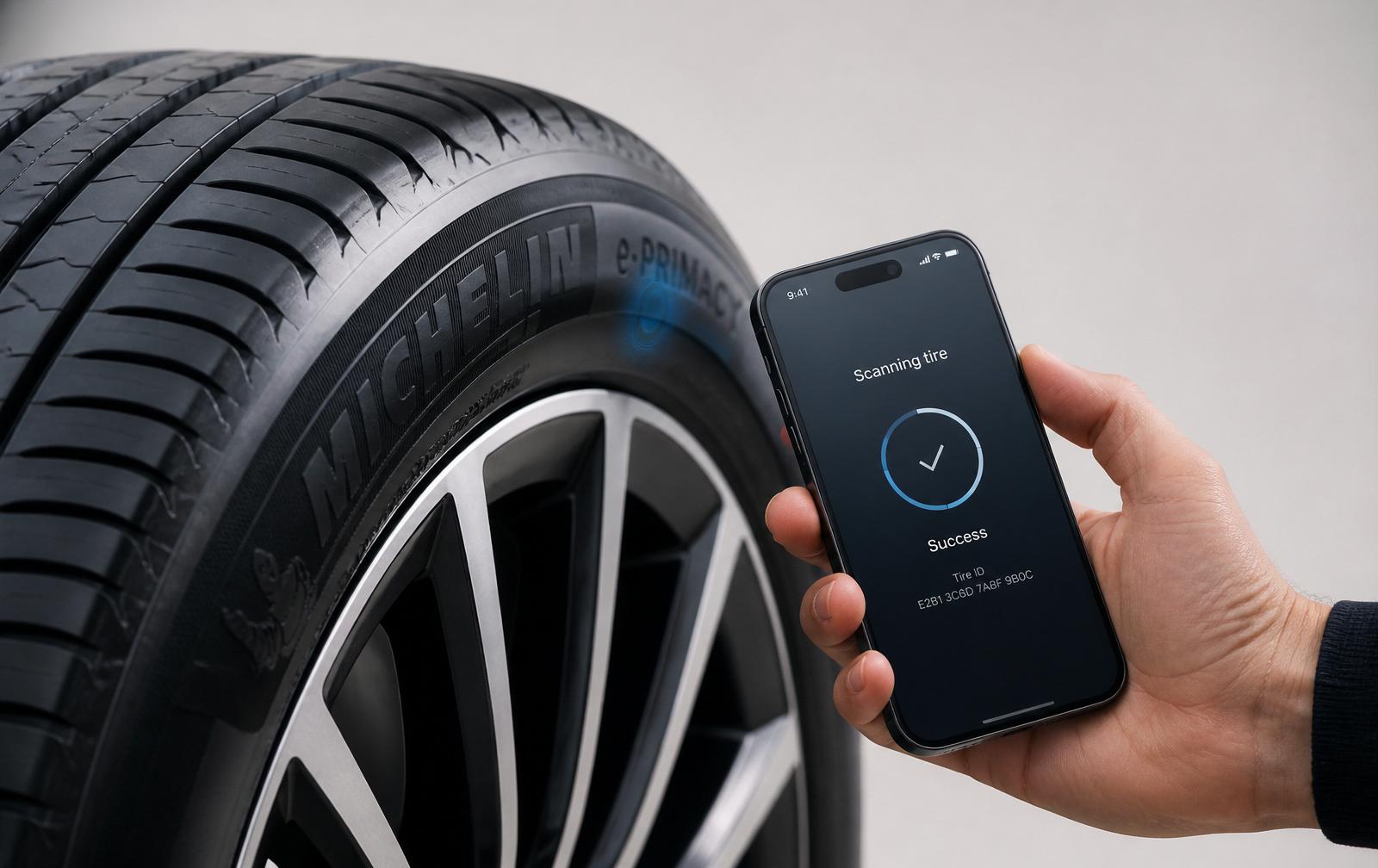
Rubber-encapsulated NFC inlay moulded flush into the sidewall. The consumer taps their phone — no app, no scan. Ideal for fit, service and resale moments.
Read range
<10 cm — a deliberate tap
Durability
Encapsulated, survives sidewall flex
Cost signal
Low — inlay + moulding step
Best for
Consumer, fitter, dealer, resale
GS1 Digital Link QR on label / box
Printed only where it survives — the paper label and the shipping box. Used pre-fit for warehouse, dealer and fitter scanning. Not applied to the sidewall.
Read range
Camera scan, any phone
Durability
Life of the label / box only
Cost signal
Effectively zero — print step
Best for
Warehouse, dealer, fitter — pre-fit
SmartLinks binds RFID EPC + NFC UID + GTIN + DOT code as one virtual item record. Scan any carrier — resolve the same tyre.
Manufacture to end of life — which carrier does the work.
Every stage of the tyre's life uses the carrier that best fits — all resolving to the same DPP.
Manufacture
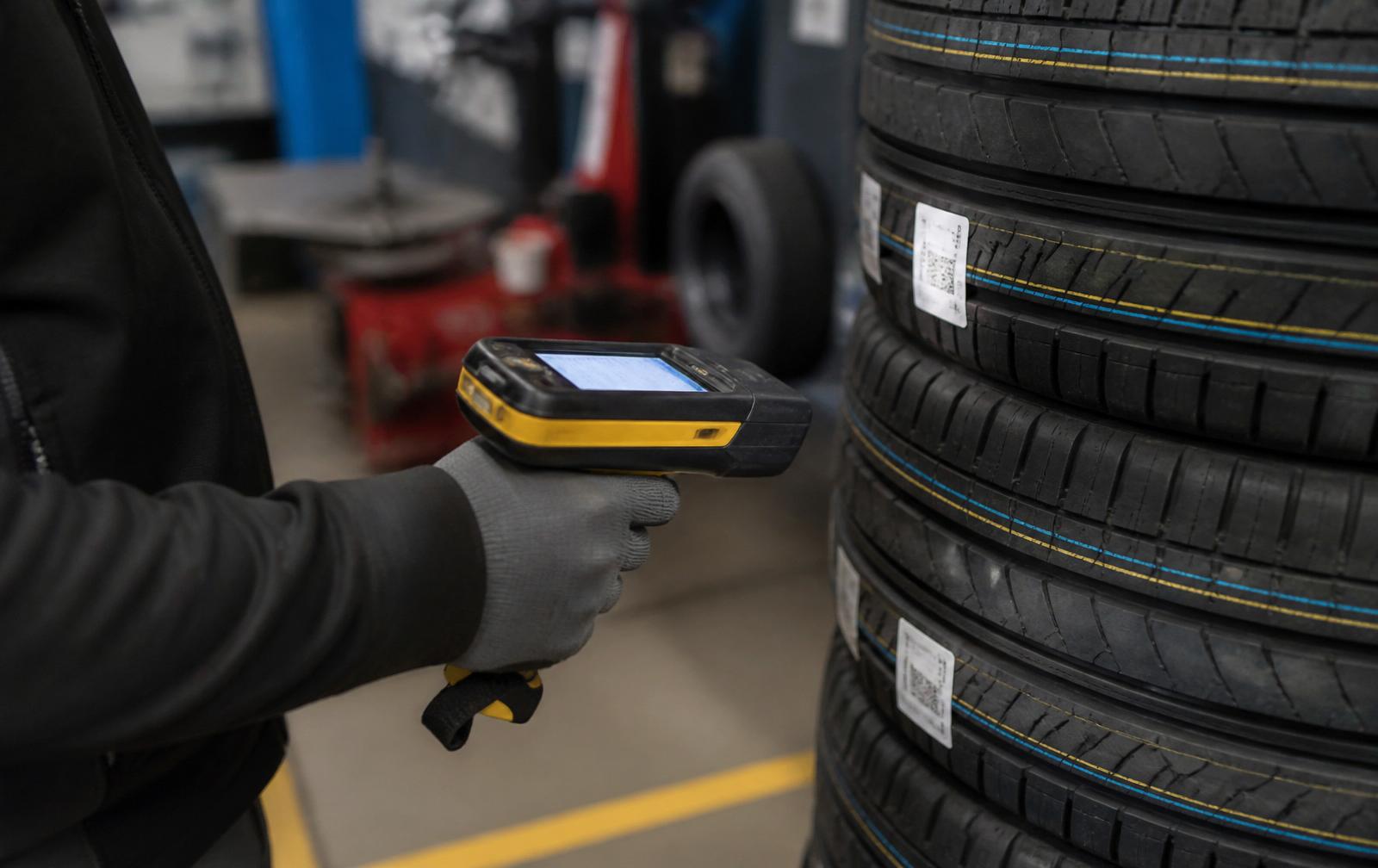
UHF RFID vulcanised into the sidewall. NFC inlay moulded flush. GS1 Digital Link QR printed on the label and shipping box. All bound to one identity.
Fit
Warehouse and dealer scan the label QR. The fitter taps the sidewall NFC to register the fit against the vehicle VIN or fleet ID.
In service
Consumer taps NFC for pressure, service and rotation records. Fleets scan UHF RFID at gates for depth and rotation logs.
Resale / retread
New owner or retreader taps NFC — the passport travels with the tyre. Retread refreshes the sidewall inlay, RFID identity persists.
End of life
Recycler reads UHF RFID in bulk on the conveyor to sort by chemistry and casing history. Material recovery reported back to the DPP.
UHF RFID
Manufacture, fleet, warehouse, EoL sorting.
NFC
Fit, consumer, resale, retread.
Label QR
Pre-fit — warehouse, dealer, fitter.
Bound identity
One virtual item record
The tyre DPP, plus everything you actually use.
Regulatory fields for 2027 — and the operational fields fleets, fitters and recyclers already ask for today.
DPP fields (ESPR)
The regulatory record.
Ownership & fitment
Who fitted it, where and against what vehicle.
Lifecycle & performance
The living record of the tyre.
Tyre DPP requirements — mapped to SmartLinks today.
ESPR Tyre DPP requirements arrive from 2027. Every field below is already live on the SmartLinks platform.
Dates reflect the ESPR Tyre delegated act timeline. SmartLinks is carrier-agnostic — start with RFID + label QR today, add NFC as tooling allows.
Ready for the 2027 tyre deadline?
Book a 30-minute walkthrough with the tyre team, or start building and connect your first casing today.