Deposit Return Schemes: UK & EU Guide
How UK and EU deposit return schemes work and what beverage producers need on every container.
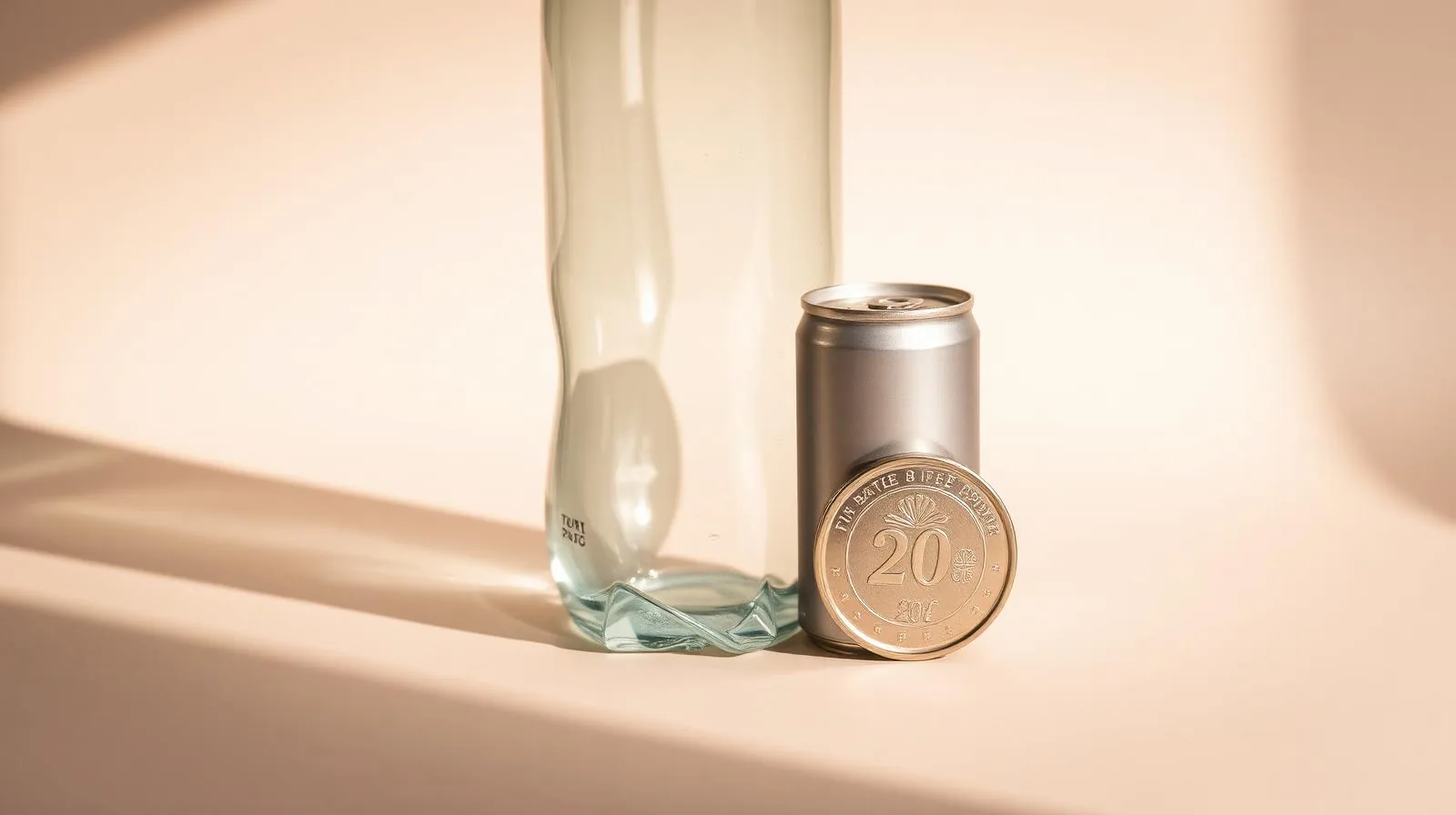
Key points
- One launch date across the UK: 1 October 2027
- UK DRS scheme logo plus a registered scheme return code on every container
- Producer fees are 0p from October 2027 to December 2028
- £6,000 per site in RVM grants, three annual instalments, up to 10,000 retailers
Contents
Deposit Return Schemes Across the UK and EU
Deposit return schemes are now the default across much of Europe, and the UK's goes live on 1 October 2027. Consumers pay a small deposit when they buy a drink, redeemed when they return the empty container. The schemes recover containers at far higher rates than kerbside recycling — typically 90%+ in mature markets — and dramatically improve material quality for closed-loop recycling.
Every scheme demands accurate, machine-readable container identification. Connected packaging and standardised data carriers are the foundation. Producers have until 1 October 2027 to get artwork, codes and registration in place.
- DRS schemes recover 90%+ of containers in mature markets
- Material quality far exceeds kerbside recycling
- Every scheme requires accurate container identification
- Registered GTINs are the mechanism, carried in a linear barcode or a GS1-powered QR
The UK Scheme: Live 1 October 2027
The UK's deposit return scheme goes live on 1 October 2027. Exchange for Change, the trading name of UK Deposit Management Organisation Limited, administers the scheme in all four nations: appointed for England, Scotland and Northern Ireland in May 2025, and for Wales in August 2026. A flat 20p deposit, confirmed in April 2026, applies to every in-scope container.
England, Scotland and Northern Ireland run one aligned scheme covering single-use containers made wholly or mainly of PET plastic, aluminium or steel, from 150 ml to 3 litres. HDPE containers such as milk bottles are out of scope, as are liquid medicines and flavour enhancers. Wales operates a separate but interoperable scheme under its own 2026 regulations, and is the only UK nation to include glass. Welsh glass is collected from day one but carries a zero-pence deposit and no labelling requirement until October 2031.
- One launch date across the UK: 1 October 2027
- Flat 20p deposit on all in-scope containers
- PET, aluminium and steel, 150 ml to 3 litres
- Wales includes glass; zero deposit and no labelling until October 2031
- Low-volume lines are exempt from fees and labelling but must still register and report: 6,250 units or fewer per SKU in year one, 5,000 or fewer per year after
What Producers Must Put On Pack
The regulations require every in-scope container to carry two things: the UK DRS scheme logo, and a scheme return code registered on the Exchange for Change Scheme Article List. Failing to carry a registered return code is a breach of the regulations.
The return code is a GTIN, unique to the individual product and compliant with the GS1 General Specifications. It can be carried in a linear barcode — EAN-13, EAN-8, UPC-A or UPC-E — or in a QR code powered by GS1. GS1 UK confirms that a QR code carrying the correct registered GTIN meets the scheme's requirements, and the Exchange for Change specification requires reverse vending machines to read 2D data matrices and QR codes from go-live.
That opens the door to a single on-pack symbol. One QR code powered by GS1 can serve retail point of sale, the deposit return scheme, and consumer-facing product information through GS1 Digital Link. The practical caveat is that Exchange for Change's published sizing, placement and quality rules are written around linear symbols, and it treats further symbologies as a future identification requirement with more detail to come. Anyone planning a QR-only pack should confirm artwork and RVM testing with Exchange for Change and GS1 UK before committing a SKU.
You may not need a new GTIN. The obligation is registration, not renumbering. Exchange for Change expects a DRS-specific barcode, and producers who keep a barcode also used in other markets may face an additional charge on the producer fee, at a level the Exchange for Change board will set in 2026. A new number is genuinely unavoidable in two cases: where one code is currently shared across more than one product, because the return code must be unique to the individual product, and on multipacks, where every container inside needs its own code and the outer pack must carry a different one.
For linear barcodes, placement is specified in detail. The barcode should sit on the container's main label in vertical ladder orientation, not on a neck label, or it is subject to additional scan testing. It must be readable at up to 30 degrees of tilt, sit at least 8mm from the base of an aluminium or steel container, and never appear on the top or bottom. It must hold ISO 15416 Grade 1.5 quality throughout the life of the pack. Products made in the UK but sold only overseas must carry neither the DRS code nor the scheme logo, which stops non-UK stock being redeemed for a deposit it never carried.
- UK DRS scheme logo plus a registered scheme return code on every container
- The return code is a registered GTIN, in a linear barcode or a QR code powered by GS1
- A single GS1 QR can serve point of sale, DRS and consumer information
- Registration is the obligation; a new GTIN is only forced by shared codes or multipacks
- Keeping an internationally used barcode may attract an additional producer fee
- Linear barcodes: vertical ladder, main label, 8mm clear of the can base, Grade 1.5
- Confirm QR-only artwork and RVM testing with Exchange for Change and GS1 UK
- Export-only stock carries neither the code nor the logo
The Cost Timeline
Producer fees are set at zero pence for the first fifteen months, from launch in October 2027 to December 2028. From January 2029, Exchange for Change expects 0.6p per aluminium or steel container and 2.3p per PET container. These figures are expected to hold until December 2032, though they are not yet final, and will be reviewed and reconfirmed in May 2027. Return point hosts are paid a Return Handling Fee to cover their costs: 3p per container at a manual return point, and at an automatic return point 5p for the first 225,000 containers a year and 1.3p for every container above that.
- Producer fees are 0p from October 2027 to December 2028
- Indicative fees from January 2029: 0.6p aluminium and steel, 2.3p PET
- Indicative fees expected to hold to December 2032; reconfirmed May 2027
- Return Handling Fee: 3p manual, 5p automatic to 225,000 containers a year, then 1.3p
What This Means For Retailers
Most retailers selling in-scope drinks will need to operate a return point, either manually over the counter or through a reverse vending machine. Exchange for Change is making £60 million available to help up to 10,000 qualifying independent retailers install machines, with grants of £6,000 per site paid in three annual instalments of £2,000.
Exemption criteria have been widened. Smaller urban and rural stores may be able to apply based on sales area, and applications may also be considered where there is sufficient alternative provision nearby, or where access, utilities or heritage and listed building restrictions make a return point impractical. Retailers should check the full criteria rather than assume they qualify.
Exchange for Change is testing reverse vending machines and expects to publish its first list of certified models in early October 2026. Retailers should not commit to equipment before checking it against the published specification and certification process.
- £6,000 per site in RVM grants, three annual instalments, up to 10,000 retailers
- Exemptions widened: sales area, nearby alternative provision, access and heritage constraints
- First certified RVM models list expected early October 2026
- Check certification before committing to any machine
EU Schemes: A Patchwork Becoming a Mosaic
The binding driver in the EU is now the Packaging and Packaging Waste Regulation, (EU) 2025/40, which has applied since 12 August 2026. Article 50 requires every member state to have a fully operational deposit return system for single-use plastic beverage bottles and metal beverage containers up to 3 litres by 1 January 2029, achieving at least 90% separate collection a year. The Single-Use Plastics Directive targets of 77% by 2025 and 90% by 2029 still sit underneath it.
Progress is uneven. Germany, the Nordics and the Baltic states run mature, high-recovery schemes, and fifteen member states have functioning systems today. Portugal launched a national scheme in April 2026 at ten cents. Spain's own deadline of 22 November 2026 is widely expected to slip toward the 2029 backstop, and in September 2026 France decided against a mandatory deposit for plastic bottles, recommending voluntary local schemes instead. From 12 August 2028, packaging covered by a deposit return system must also carry the harmonised EU label set out in PPWR implementing acts.
- PPWR Article 50: operational DRS in every member state by 1 January 2029
- 90% separate collection target, with SUPD targets underneath
- Fifteen member states already operating; Portugal launched April 2026
- France rejected a mandatory deposit in September 2026; Spain is likely to slip to 2029
- Harmonised EU DRS labelling applies from 12 August 2028
How Connected Packaging Supports DRS
The deposit return scheme identifies containers by the GTIN registered with Exchange for Change, and reverse vending machines must read QR and 2D codes as well as linear barcodes from go-live. That means the code satisfying the scheme can be the same code that opens a Smart Product Page for the customer, rather than a second symbol competing for space on the label.
- The scheme identifies containers by the registered GTIN
- One symbol can serve the scheme and the customer
Tip
A QR code powered by GS1 can carry the GTIN registered with the scheme and open a Smart Product Page for provenance, loyalty and repeat purchase. You are reopening the artwork for DRS anyway — the question is whether the pack comes back as a compliance cost or as a route to the customer.
Avoiding Cross-Border Deposit Fraud
When deposits vary by country, fraudsters arbitrage the difference — buying in low-deposit markets and returning in high-deposit ones. Country-of-sale identification on the container defeats this by allowing reverse vending machines to verify legitimacy at the point of return.
In the UK the mechanism is scheme-specific barcodes: DRS marks must not appear on export-only stock, and international barcodes used across several markets may attract an additional producer fee.
- Cross-border arbitrage is a real and growing problem
- Country-of-sale identification defeats fraud
- Reverse vending machines verify legitimacy at scan
Preparing Your Beverage Brand for DRS Compliance
Map your countries of sale against active and planned DRS schemes. Confirm the scheme return code and scheme logo on every in-scope SKU, and check whether new GTINs are required. Plan packaging artwork changes ahead of scheme go-lives. Choose a connected packaging partner that supports both compliance and consumer engagement on the same tag.
SmartLinks gives every container a digital identity, so the pack that satisfies DRS also carries provenance, loyalty and repeat purchase through the SmartLinks Hub.
- Map countries of sale to active and planned DRS schemes
- Confirm scheme return code and scheme logo on every in-scope SKU
- Plan artwork changes ahead of go-lives
- Choose a platform that combines compliance and engagement